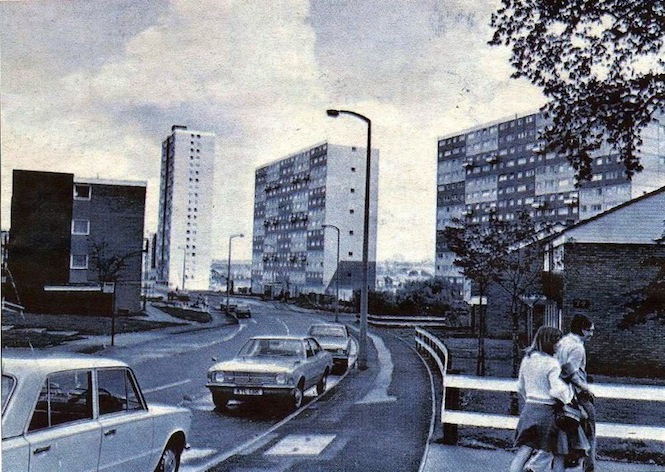
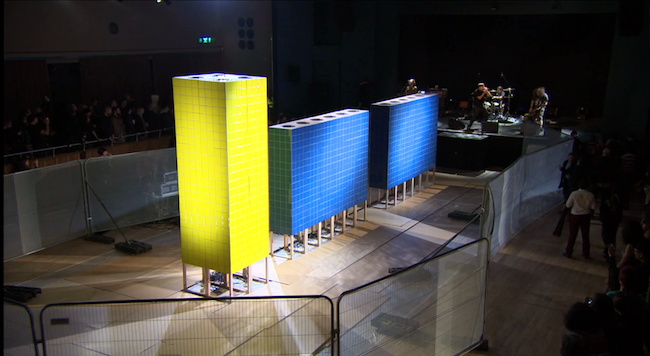
Tuesday

Working on ‘Big Dinner’ exhibition at Limbo, Margate

Pipe has recently been working with Limbo, an exciting artist led arts space in Margate, on their current exhibition Big Dinner. This is the first of a series of shows which will make up their Guests series.

For this series Limbo “invites an established artist who either lives, works or has worked in Kent to take on the role of host, and to themselves invite others to collaborate with them on a project of their choosing.” In the case of Big Dinner, the artist is Matthew Darbyshire.

As part of our work with Limbo, Pipe has written an essay for this show. The essay is titled Individualism, mutualism and ‘Big Dinner’ and can be accessed through Limbo’s website. In addition to this, there you can find the show’s press release, all other relevant information and discover what else is going on at Limbo - all links can be found on the appropriate text here.

Here is a selection of some of Pipe’s photographs from Big Dinner. Captions include the works’ titles and the artists responsible.


Big Dinner - Pic 1 Works here include - centre: Seaside Fun by Erik Larsson; top left: Chandelier by Matthew Darbyshire; right: Pink by Robert Rivers & back wall left: Raspberry Ripple by Tara Tate 


Big Dinner - Pic 4 Artworks here: Milou Van Der Maaden’s Popcorn & James Kelly’s Prescient Device


Big Dinner - Pic 2 Pictured is, Julia Crabtree & Will Evans work Gypsum Cave


Big Dinner - Pic 3 Front & centre here is Let Us Leave by Henna Vainio & on the back wall is Circles, a painting by Sung Yeon Lim


Pic Big Dinner - Pic 5Top right (partial) is Darbyshire’s Cleaning Trolley; bottom left Glitter Boots also by Milou Van Der Maaden and top left Lyme Avenue by Aimee Sawicki


The full list of artists exhibiting at Big Dinner are:

Julia Crabtree and William Evans, Matthew Darbyshire, James Kelly, Erik Larsson, Sung Yeon Lim, Milou van der Maaden, Robert Rivers Aimee Sawicki, Tara Tate, Henna Vainio

The exhibition runs until the 19th of May and is already creating a buzz. Therefore if you get a chance to visit Limbo, I recommend that you do so. 


Alternatively click here for Individualism, mutualism and ‘Big Dinner’ essay.

If you want to ask us anything about our work, feel free to contact Pipe at pipeinyourlife@gmail.com; or simply leave a comment here, thanks.

Friday

Lee Friedlander & Post Modern Photography: Deconstructing Albuquerque, New Mexico (1972)


In this article I will examine a specific photographic image. Lee Friedlander’s photograph, Albuquerque, New Mexico (1972) is the image I intend to scrutinise. Whilst attempting to deconstruct this work, I plan to reveal certain implications that I judge it contains and explain what these mean to me. By deconstructing it I intend to discuss some of the main themes I deem the image conveys about the times in which it was made and the relevant historical period. In conjunction with this subject, I will firstly, briefly examine the category of Postmodern Photography; one which this photographer and his work are often classified as being a principal part of. Whilst doing this I will also explain what some of the important thematic implications relating to this terminology are. Through this critical process, I will attempt to demonstrate how an artwork can be an interesting allegorical interpretation of reality.

In a referential sense, Albuquerque, New Mexico (Fig 1) by Lee Friedlander (1934 - ) is a seemingly indistinct image that contains many obvious characteristics related to a typical postmodern city scene from that time. As I intend to formulate an individual interpretation of possible ‘meaning’ within an image - as a central aspect of this paper - this is why I have chosen a photographic work from the ‘postmodern canon’. The ambiguous nature of images linked to this fairly unsatisfying idiom, almost universally encourage such analyses to be made. In my view the intriguing nature of this ‘ambiguousness’ is fundamental to their artistic appeal. In fact this process of critical interpretation and reinterpretation was, and still is a central factor in the ongoing deliberation on these postmodern photographic artworks.

Friedlander is a photographer who has come to be categories as the archetypal Postmodern Photographer and this work is a prime example of an image directly categories by these terms. The photograph itself is of an American city scene and shows a dog sitting at an ‘intersection’, dwarfed by a fire hydrant that sits in the central foreground of the shot.


Friedlander Albuquerque, New Mexico Figure 1 - Albuquerque, New Mexico


Friedlander makes informal, seemingly unplanned images; similar to other allied photographers from this period and ‘grouping’ (the most famous of his peers being Diane Arbus (1923 – 1971) and Garry Winogrand (1928 – 1984)). Ambiguity appears as being essential to Friedlander et al.. This has become integral through the critical assessment of their work because it naturally allows for more subjective readings to be made. Martha Rosler states in her essay on Friedlander’s photography that: “It had aimed to signify a transcendental statement through subtraction or rationalized arrangements of elements within a photographic space”[1]. This of course could be said about any visual image, which Rosler concedes. However Friedlander’s work invites the viewer to do this right from the moment one starts looking at the image. There are no overtly attractive details to admire or any initial obvious contexts. This is an image which is intriguing because of its uncertain purpose and unconventional relationship with more traditional photographic treatments.

I feel the task here for Friedlander as Photographer is an instinctual one. In a sense the creation of the work relies on a certain amount of chance. However I consider the physical action and technical processes needed are heavily supported by a critically informed background and a certain defined purpose. These decisions and judgements must be made in order to create such an image. This photograph is not shocking or novel. At first there seems no reason for it to exist at all. Yet on deeper inspection it becomes apparent to me that it may be representative of more poignant ‘concerns’. Only if the image is intriguing enough though, will the viewer try and find any deeper meaning in it. Undoubtedly Friedlander has achieved this wider ‘interest’ here - and through his practice as a whole - for his work has come to be judged as one of the most important ‘bodies’, and he one of the most cited figures, within the history of photography.

The notion of an implied ‘narrative’ or referential statement is what interests me. With this in mind, I believe a theoretical, and greater symbolic meaning is evident in this photographic work. Friedlander’s image shows a dog sitting at an ‘intersection’; alone, it is engulfed by its stark surroundings. What I have attempted to do when viewing this photograph, is think about the social and political context of the work’s origins. I deconstructed the image with this as a primary consideration and it started to suggest to me a variety of different connotations. The Dog is alone and is in contrast, both physically and symbolically with this very light, bright, white, well ordered; almost pristine environment. The apartment block is a formal linear construction. Modern and utilitarian, this building is typical of the street scene itself. This structural trend is contrasted by a detached house. Also just as modern, however it has a ‘mock’ Georgian entrance complete with pillars and garden features. This house seems synonymous with a wealthy old colonial home, with its clear imperialist connotations. The notion of ‘individual’ power and wealth – a ‘divide and rule’ mentality linked to US history itself – in relation to this building, could be assessed as making reference to the Slave Owner’s residence; separated and austere. This historical observation and assumption will help legitimise my reading further.

The Dog is visually dissected by the lamp-post. He appears to be calmly waiting to cross the road. Potential danger waits as he is alone, a hazardous prospect for a dog or for one who cannot see the ‘other side’, as is the case within this frame. The symbolic nature of this potential ‘journey’, and the imagery as a whole, will too relate to my reading of this image.

This leads me to my analysis of Friedlander’s photograph. I suggest that this image can be interpreted as a comment on the civil rights movement in America, specifically during this period and from the decades leading up to 1972; when the work was made. The Dog in the photograph is at odds with its environment - cast out in a sense. This animal creates a contrast between both living and non-living objects, and between black and lighter tonal areas. This is a totally black dog in a comparatively white, bright scene. This creature has been visually intersected; symbolically ‘cut in half’ by the lamp post - an object synonymous with the modern city - in which black society had constantly been castigated from. For the centuries leading up to this moment, and beyond, they had often been subjected to the most heinous treatment; everything from extreme verbal abuse to actual lynching and murder. Even if significant progress had been made by this time – in 1972 they were still not completely socially accepted by everyone and certainly any notion of ‘equality’ was a long way off - especially in the American Deep South where this picture was taken.

If therefore, the Black Dog is considered a metaphor for the standard of treatment and the oppression of black people by the white ruling establishment, then in my view this image acts as a fitting allegory. The Dog as a symbol, in relation to my reading, connotes the sub-human status devastatingly inflicted on Black Society. Its lonesome reflective nature, calmly and in a dignified way, awaits the ‘unknown’. This invisible ‘change’ or progress is mirrored in the fact that we cannot see the other side of the road. Its presence although, also recalls the dogs used in many riots by police and racists to often assault, harass and threaten black people. On the other hand crucially however, this Dog’s existence here is totally at odds with both the aggressive nature, and the breeds, associated with those kinds of dogs. Its calm considered pose therefore links back to the largely honourable way in which the civil rights movement was conducted and eventually won through a collective sense of unity and by diplomatic means.

Another visual clue in this regard is the main focus of the image -the fire hydrant. I see this as a visual ‘gag’. Perhaps this is an ‘artistic nod’ to the documentary images of street photographers like Helen Levitt (1913). In many of her works (and her numerous contemporaries besides) the hydrant is presented as a source of fun and play for the working class children - and typically kids from largely ‘minority’ or ‘non-white’ neighbourhoods (Figure 2); as depicted in her work Untitled, New York (1942). Conversely though, I also suggest that this too symbolises the high powered jet hoses infamously used by the police when controlling many black people and other civil rights protestors; and is related too much of the police brutality which took place during this historically period. As the Dog is directly in the ‘firing line’ of one of the hydrant’s valves - and the potential jet powered stream it contains - then this reading becomes synonymous with both these cited references as it effectively combines my two associated readings.


clip_image004

Figure 2 – Untitled, New York


Central to this image (and to Levitt’s also) is the act of ‘crossing’ the road - an attempt to make it to the ‘other side’. In the case of Albuquerque, New Mexico, this side is concealed as it is outside the frame of the image. Through this reading, I am reminded of Martin Luther King’s prophetic, final speech, when he articulates using an array of biblical metaphors: “I have been to the mountaintop; and I have seen the Promised Land”; and even more pertinent to this interpretation, when he utters the moving words: “That we as a people can get to the Promised Land”. In my view his sentiments provide this photograph with connotations that are deeply affected by notions which surround equality, ethnicity, society and politics. The “difficult times ahead” that King also spoke of on this occasion, are manifest in the fact that this black Dog has been ‘captured in time’ as is photography’s way. The image will never allow the Dog, now or ever, to make it across the road, to the unseen other side. This ‘other side’ represents the imagined “Promised Land” which Dr King alluded to in this speech; as he had done consistently through out his political life. This environment is clearly intimidating to the solitary Dog. King’s situation was made hostile, unforgiving and often antagonistic to him also. The symbolic journey that King was undertaking, and leading many others on as well of course, tragically culminated in the ultimate act of aggression and violence towards him.

When considering ideas connected with political change and social equality, one must think about these issues in relation to ideology. Ideological change is adequately described by Louis Althusser (1918 – 1990) in “Thesis II” from his essay Ideology and Ideological State Apparatuses: “Ideology has a material existence”[2] which manifests itself as ownership and commodities. There is only change or ‘something else’ when it is perceived to benefit the financial powers of the adopted ideological system. This helps structure some of my sentiments relating to Friedlander’s image. As a result, the Dog in the photograph, for me, is in complete contrast to the soulless, bright, ‘white’ surroundings. Hidden behind a seemingly innocuous view, this is reflected in the unseen troubles of the tower block in the background of the image; similar to many others like it in neighbourhoods all around America. In this controlled and well ordered setting there is a society subtly at odds with itself. On show is the “bourgeois-decadent minimalism”[3] that Mike Davis (1946 - ) discusses in his book City of Quartz, a text which deals with the notion of the ultimate “postmodern city” – secure, yet utterly divided. This facet of a divisively structured modern city is too subtly reflected in Friedlander’s image.

The traits of Western capitalism are clear to see in Albuquerque, New Mexico. However in instances like this, a ‘mask’ of uncertainty makes the interpretation of the postmodern photographic image a more problematic one. However this does give way to a more subjective empowerment. Through the use of visual metaphors and connotations, the image can be seen as a direct descendant of the surrealist treatment of form. This allows the viewer to scrutinise and make their own judgements as to what they see and what importance it may, or may not have, to them. This additional link in my investigation connects with surrealism. The sentiments of Louis Aragon (1897 – 1982), one of the founding members of The Surrealists are fitting in this regard. Here he describes how he felt when viewing certain new surrealist compositions:

“Objects metamorphosed before my very eyes; they did not assume an allegorical stance or the personality of symbols; they seemed less the outgrowth of an idea than the idea itself.”[4]

This quote embodies the fundamental nature of what this, and many other postmodern photographic artworks challenge the viewer to do. To not just simply see the literal meaning of the physical objects and subjects they contains, which may in countless cases seem arbitrary on first inspection. But the challenge with images of this kind, in my view, is to attempt a deeper and more meaningful understanding as to why they have remained important works within the history of art and their media. In the spirit of this task of subjectively deciphering an image, my own process of elucidation is what I have tried to expressive in this paper. The method deployed here therefore, for an in-depth scrutiny of the image, I judge, reveals meanings and connotations of socio-political and culturally historical significance.

Of course all these views are my own. I am not suggesting that this is what Friedlander necessarily intended the viewer to think about when viewing his work. Nevertheless this ‘loss of control’ is the time worn trajectory of the artist. Once the artwork enters the communal visual ‘arena’, the work leaves the artist’s critical domain and they lose exclusivity over it. How ‘open’ it is, and worthwhile it becomes, in terms of examination and interpretation, is down to many factors. What I have attempted to describe here is how the stylistic traits and formal considerations associated with Postmodern Photography (which this work is a prime example of) have allowed for a greater and more meaningful analysis of this photograph - and the many images linked to this category - to be made.


[1] Martha Rosler, ‘Lee Friedlander, An Exemplary Modern Photographer’, in Decoys and Disruptions: Selected Writings, 1975 – 2001, (London: An October book, Cambridge Mass. Press), 2004, p. 114.

[2] Louis Althusser, ‘Ideology and the state apparatuses (notes towards an investigation)’, chp. 19 in Visual Culture: The reader, ed. by Evans and Hall, (London: Sage Publications, 1999), p. 318.

[3] Mike Davies, ‘Fortress L.A’, chp. 4 in City of Quartz, (UK and US by Verso, imprint of New Left books), p. 236.

[4] Rosalind Krauss, Photography in the service of Surrealism, chp. 1in Amour Fou: Photography and Surrealism, by Rosalind Krauss and Jane Livingston, (London: Arts Council of Great Britain, 1986), p. 25.

Saturday

A week at Pipe, and changes are afoot…

Follow our wicked adventures on: Instagram. . .imageimageimageimage.. . and see what’s on our minds at Pinterestimageimageimage[Pinned: William Kentridge, The Seventh Seal, Eva Hesse. . . ]

We are also making some visual changes to Pipe. More of which will slowly emerge throughout April...image
pipe smoking baby..?
ENJOY!

Monday

William Turnbull, the man who never stopped drawing

william-turnbull1Portrait of William Turnbull (1922 – 2012) taken in his studio in the 1960’s


When the Scottish artist William Turnbull died on the 15th of November last year, it was the end of a life that was as eventful - and at times thrilling - as it was significant to his chosen vocation. Through his work, he managed to achieve a status as one of Britain’s most influential artists of the last century. Nevertheless it is hard for me now to think of a stereotypical Turnbull piece. Perhaps one of his horse head sculptures; or female standing figures; or his paintings of solid colour dissected by a single line? I tend to think more of the overall thematic treatment and contemplatory nature of his work than of any specific pieces. Most of his work carries characteristics that allow for quiet reflection. The subtle qualities of his creations slowly transfix the viewer; this is the real charm of his work. Often described as sort of ‘timeless’ and archaic – the pieces often seem less of their ‘time’ and more of ‘all time’. I see the overriding emotions they carry as being intrinsic to our sensory human experience. Removed from any specific social and historical context, the work is in a sense native; that is - it is more in tune with indigenous art, than with the ‘other’ more commonly seen representational forms associated with the western tradition.


1955-Female-Figure Female Figure; 1955


turnbull-horse1 Horse; 1999, at Chatsworth House, Derbyshire – The horse’s head was a subject he would continue to re-visit through out his career


Turnbull’s life reads like something from a classic novel or cinematic narrative. Born in 1922, the working class boy from Dundee would be directly affected by the Great Depression of the 1930s. Having to leave school at 15 to work as a labourer because his Father had lost his job during this economically dire period, he still managed to find a way out of this grinding work and bleak existence. He gained a job at D. C. Thompson the famous Dundee based publishing company (famed for the Oor Wullie, The Broons & The Dandy comic books). Working with colleagues who had been to art school, Turnbull always emphasised the importance of his time spent at Thompson’s on his later career as an artist. He would view this as the start of his art education. This work also seemed pertinent for a man who had had a strong connection with art from his infancy. In fact he had learnt to draw by copying comics and other illustrations as a child. These early fascinations with ‘pop’ imagery and an intrigue in the mass produced popular images of the time, was an experience similar to that of many of Turnbull’s contemporaries. By focusing on popular culture in this way, many artists from this generation would go onto profoundly inform and shape much of the art of the 50s & 60s. Along with Turnbull, some of these artists would later form the now highly important Independent Group of the 1950s. These artists included Eduardo Paolozzi (1924 – 2005), Richard Hamilton (1922 – 2011), and Nigel Henderson (1917 - 1985) amongst others. The group would be integral in heralding in a new and exciting time for British art through their diverse and innovative work. These events would coincide with the emergence of the ICA - the centre for new art in London - and the associated This is Tomorrow exhibition at The Whitechapel Gallery in 1956. Turnbull helped develop and champion what would later be known as Pop through his progressive treatment of forms and the use of new materials in his work, like Perspex and Fibreglass. However his work would be more heavily informed by tribal and Eastern religious art. His marriage to the equally brilliant Singaporean Artist Kim Lim (1936 – 1997) in 1960 (who still hasn’t had anything like the wide recognition in the West that Turnbull has had, which she richly deserves), undoubtedly played a significant role in the direction Turnbull’s work would take and the development of its subject matter. The impact of her culture and their travels together unquestionably played a vital role in this regard.


A poster from the influential This is Tomorrow exhibition of 1956, where Turnbull exhibited


Even though his work and life would change quite dramatically over the decade’s one feature of his practice always remained constant. Brought about by his early fascination with ‘pop’ imagery and through sketching the pictures he found, one aspect of his working method that never changed through out Turnbull’s life, was his commitment to drawing. He would never lose faith in the full realisation of the inherent importance of this activity on the discipline of the artist’s practice.

During the Second World War Turnbull served in the RAF. He found that this experience made a profound impact on his perceptions of the world he observed and particularly how he viewed landscapes. He made a visionary discovery when flying his plane. Viewing the world in this aerial way would go onto fundamentally inform his work as a painter. The compositions of the ‘bird’s eye’ views he saw would provide the initial structures for his later expressionistic abstractions.


Turnbull painting1 One of Turnbull’s recognisable abstract paintings from 1958, simply titled 15. Forms that were conceived of when he served in the RAF


After the War he stayed in London and enrolled at the Slade, but quickly felt disillusioned with the conservative outlook of this institution. His passion for European Art was not in keeping with the Slade’s traditional approach to art education, therefore Turnbull relocated to Paris where he felt far more at home. There he was in his element. He was surrounded by artists who he connected with and who’s modern and progressive work would inspire and shape his own work dramatically. In particular Alberto Giacometti (1901 – 1966) made a huge impression on Turnbull both as an artist and as a person. The textured and ‘animated’ aesthetic Giacometti fashioned, and came to be so synonymous with his work, is an aspect that would come to feature in many of Turnbull’s own sculptures.


Alex-Turnbull Alex Turnbull, who made Beyond Time, the marvellous documentary about his father’s life and work – pictured beside the work itself 


Whilst watching Alex Turnbull’s charming documentary Beyond Time it became clear to me why his father’s body of work is so important to 20th century Modern Art. Because it was constantly evolving and transforming, it makes the work almost always seem fresh. There is no complacency or the suggestion of a jobbing artist just going through the motions. He practiced both as a painter and a sculptor. Yet his works from both these disciplines hold up in terms of their quality and impact on their respective fields. For many artists working with more than one media it is often deemed problematic. However Turnbull was able to achieve success in both these areas. More importantly though his work still holds together as a coherent statement and one which never wavers from its intention to effect the natural sensory perceptions and emotions of the viewer. He seemed to understand what the purpose of his art was, and although its aesthetic changed fairly dramatically over time, its focus and themes never really did. His understanding of the work and development of the subject matter is crucial in creating this vital body of work.


The poster for Beyond Time (2012)  


It would seem to me from watching Alex’s documentary and researching Turnbull’s life that his legacy as an artist is of one who was absolutely dedicated to the process of making the work himself. As a practioner Turnbull’s approach was the antithesis to that adopted by the conceptually driven fine art, produced by much of our recent stream of contemporary artists. His work places the emphasis on the artist creating works themselves. This initiative would take precedence over every other aspect of the work’s inception. The ‘idea’ is not Turnbull’s dominant interest. The clever twists and witty statements that have become the norm in today’s contemporary art scene, seem in opposition to the ethos adopted by Turnbull, and many of his contemporaries. Turnbull was an artist who always worked around the same basic core themes and principles. He wanted the intrinsic emotive sensations conveyed by his forms, structures and abstracted imagery to be the principal purpose of the work. The idea of creating something from nothing was an aspect that never deserted him from his earliest times as an artist. The bag of dust that he could fashion into plaster and work into the shapes and forms he wanted would be a fundamental process for Turnbull. Although he moved away from working in this media, his use of plaster was an aspect of his work that he would return to and is now the material most associated with his work. Here was a man who taught himself to weld. When he began working in this way in the mid 60s, he and fellow artist Brian Wall (1931) would weld in the foundry at the Central School of Art where they had both started teaching. Turnbull would also work in his own back garden, toiling and sweating away on his sculptures until he had them welded exactly the way he wanted. There was no chance of him signing off an idea or a drawing, then leaving it to a team of technicians to construct. No, he was both the artist and the technician in that sense. In fact, as would surprise many artists nowadays, Turnbull would not separate these two roles. For him the artist should always play a critical role in the practical creation of their work. In the film we even see a 90 year old Turnbull working alongside the technicians in order to create the exact representations he wanted. From his early years working in Paris, and his time spent viewing Giacometti and Brancusi (1876 – 1957) working in their studios. This central belief of the artist and their studio being the place where all creation comes from - both informatively and practically - is something that never changed in Turnbull’s mentality. This undoubtedly connects with his belief that the artists must draw. For him it is the way in which they are able to make sense of the way they see the world. Drawing always informed his work and is something that he would forever continue to practice.


William Turnbull I by Nadav Kander A recent portrait of Turnbull taken by the renown photographer Nadav Kander  (1961) 


I feel that William Turnbull - like many of his contemporaries - will be remember as an artist that made work which challenged the traditions of art, but was still completely aware of the importance of art’s history on his practice. He realised that one is always a student and that the career of an artist is about learning. This is the key to longevity. The complete body of work one is able to create during a lifetime, is the ultimate achievement of the creative being. The media obsessed, careerist artists, that in the last few decades the art world has become inundated with seem totally at odds with the stance taken by Turnbull et al. For them the creative process was not just about the idea or the rhetoric which reinforces that idea. It is crucially about the artists’ involvement in the making of the work; the execution of their creative vision and the development of their practice over their lifetime. One still tends to agree with the time worn ideas that guided Turnbull. That the artist’s “development” is made far more successful through the use of the same basic principles that have always directed them. One of these fundamentals is that the artist understands their practice through the act of drawing. For me this has never changed and I don’t see it doing so any time soon.


Trailer from Beyond Time - the entire film is still available at the BBC iplayer

Saturday

The Greatest Films Ever Made According to Pipe, Numbers 5 – 1


Andrei Tarkovsky The Art of Film Making


The process of selecting my ten favourite films ever made was something that, once undertaken, I certainly relished. I knew however, after reading Sight & Sounds’ list and looking at the history of their poll, that this would be a process that required some guidance. I would therefore have to assert a little order into these ‘proceedings’. As someone who has studied film and has seen many great movies; I felt the best way was to spend a few days thinking in terms of directors, and site the films by them that I admire. In doing this I wrote down every film I liked and thought might merit a place on my list; but without getting too critical about it at this stage. Thinking about directors and the works by them I like, helped me do this. After a few days and much deliberation, I settled on a list of around 80 films. This would be my starting point.

A close inspection and consideration of these 80 films was made. I thought again of the directors I wanted to be represented on my list; the films that had made the most profound impact on me as a student of film and the ones that I believe are the most important to the cinematic art form itself. With this in mind, I reduced the list to around 30 entries. Further reflection halved this list. Then from 15 films I made the very difficult decision to lose the 5 films I felt on this occasion weren’t quite as important to me. I knew then, when I looked at my list that my process of selection had worked. I was as satisfied with these ten films as I could have been.

I decided in order to obtain a list that would represent a variety of my different tastes and thoughts about film, that I would allow only one film per director. I thought of this as a kind of Desert Island Discs, but in a ‘filmic’ sense. I still think this is the best way for one individual to carry out, what is after all an undemocratic process. If one casts their eye over Sight & Sounds’ top ten list, there is no director with more than one film in that list either. I take the point that there is nothing stopping a director from having multiple movies in their best ten films. However, the fact that it has never happened yet, and with it being such a vast voting system, it makes this possibility highly unlikely to occur. Nevertheless, we aren’t Sight & Sound and our voting ‘turn out’ is 1 to their 846; making the comparisons and equal rules on voting structures a little unfair.

Rating art is difficult to do successfully, especially judging the sorts that you love. Nonetheless, I still think that from my point of view these ten films absolutely do embody everything I love about cinema. Therefore my self-imposed logical ‘restriction’, of only one film per director, has still produced a list I can stand by fully. Crucial, when I look at the ten now I can honestly say that they are the films I would pick at this moment if I were only allowed ten for my trip to that island – which, with any luck is located somewhere sunny.


5) Force of Evil (1948), dir. Abraham Polonsky (1910 - 1999)


Garfield and Gomez, brilliantly reflecting the dark side of the ‘American Dream’


This film has to be on my list because, on a purely personal level it played an integral part in fundamentally changing my own vocational direction in life. Having studied Film Noir during a night class, I decided to write the optional essay on this picture. This was a defining moment for me. When analysing the work, I realised that my appreciation of film, and art in general, was something that was far more important than simply being a ‘general interest’. No, from this moment I knew this was a deep rooted passion. Whilst studying this remarkable film and its genre, I came to the realisation that I would now have to pursue these studies as far as I could – and my education continues…

John Garfield (1913 – 1952), the lead actor in the film and Abraham Polonsky it’s director, were both victims of the brutal House of Un-Americans Activities Committees and their associated Communist ‘witch hunts’. Led by Senator Joseph McCarthy (1908 – 1957), this “Committee” ‘black listed’ these two men - along with many others - and they were unable to work and travel freely. At the height of the Cold War this was a truly shameful period in American history. In many respects, the film itself seems to be a subtle metaphor for much of the criticisms of the Capitalist system at that time. John Garfield (who, unlike Polonsky never recovered from not being allowed to work; dyeing of heart failure aged just 39) plays a crooked lawyer called Joe Morse, whose greed is the catalyst for the film’s tragic events. The film’s strikingly theatrical dialogue, all of which was written by Polonsky, makes it utterly compelling to watch. Garfield and Thomas Gomez (1905 – 1971) - who plays Leo, Joe Morse’s brother, a good man in the film, but one who breaks the law everyday. Because of his brother’s actions and the system that creates them both, Leo eventually pays the ultimate price. These two actors’ scenes together and the delivery of the dialogue have an almost biblical undertone. It is not just the script however. The imagery, historical, political and social importance of the picture, makes it one of the 20th century’s most complete artistic statements in cinema. It is one of those films that I try and watch at least once a year and it gets more impressive each time I experience it. This is one of the greatest American films ever made. In my view it may even be the greatest. Force of Evil makes my list for these reasons and because of the crucial part it played in my own ‘artistic awakening’.


4) Aguirre, the Wrath of God (1972), dir. Werner Herzog (1942)


The sheer scale of ‘Aguirre’s’ opening scene


Like others mentioned in my ten, this  is another tale of ‘Fools Gold’. The film, set in 1560 is the story of a troop of Spanish Conquistadors and their trek through the Andes into the jungle below. It isn’t clear what the purpose of their mission is. Historically it relates to the Spanish conquests of the ‘Americas’ and expeditions which took place during the 16th century. However these fictitious characters and specific events come from the imagination of Herzog the director. This disastrous journey seems to be directed by the Christian God, associated Bible and forces of Spanish colonialism, and takes them into a totally alien and inhospitable environment. The absolute insanity of these acts, appear as  a sort of pilgrimage. Everything about this venture is doomed to fail right from the moment we the viewers join this troop of Mercenaries.

Klaus Kinski (1926 – 1991) plays the main role of Don Lope de Aguirre and puts in the performance of his life. His strutting mannerisms, animated expressions and the technique he uses to step into the camera’s line of vision, is like nothing I have ever seen in cinema; before or since. His volatile relationship with director Herzog now has a legendary status in film folklore (for more on this see Herzog’s intriguing documentary on the subject called, My Best Friend; 1999). Kinski’s character is a megalomaniac and his awful actions on camera were mirrored with his conduct towards the other actors and crew off it. In fact, the latter was clearly a lot worse as this behaviour took place in reality. However, putting this to one side, the madness that develops in Aguirre and in Kinski’s character is able to transcend the story and the film itself. Being a sited influence on Francis Ford Coppola’s (1939) 1979 film Apocalypse Now; Aguirre has also been read as an indirect comment on The Vietnam War. I would say that this is a far too simplistic comparison. I feel that one of the reasons why this film is so magnificent is its ambiguity; especially relating to such subject matter as this. This reading certainly has plenty of credence. Nevertheless, I believe that this interpretation should, and perhaps now has a broader symbolic significance. The aimlessness and the insanity it creates in the film – on a humanist level – for me acts as a metaphor for much of the West’s foreign interventions and their Imperialist aims.


3) Barry Lyndon (1975), dir. Stanley Kubrick (1928 - 1999)


Appearing like a painting; Barry Lyndon is a visual masterpiece of unparalleled beauty 


On first inspection it would seem odd that this film should be anywhere near my list of ten films. Firstly, I am not on whole particularly fond of what has now come to be described as ‘Period Pieces’. A category that this film almost certainly falls into. And secondly, I largely find Ryan O’Neil (1941) a fairly boring presence as an actor. He plays Redmond Barry, the lead protagonist in the film. This isn’t really a great starting point, if I think of what appeals to my own tastes. However, I am a great enthusiast of Stanley Kubrick; like almost everyone else who is infatuated by film. In my view this is his greatest picture. ‘Better than 2001?!’, I hear you cry. A film that I have marvelled at also, but for quite different reasons. Allowing for only one film in my ten from a director (which I can assure you takes nothing away from the others on my list), I confidently went for Barry Lyndon because of its beautiful imagery; its emotive, sumptuous cinematic ‘flavour’ and its black humour; and how at times, it verges on the ridiculous.

This film is one of those rarities in cinema – not always so rare in Kubrick’s case – when every character is pretty much unlikeable. I think this is actually why the casting has been so brilliantly selected. You believe in the Barry character completely, because O’Neil is totally convincing in this thoroughly loathsome role. It is somewhat of a frustrating dichotomy however, as Barry is an extremely complex character. One is always trying to understand him and make sense of his actions. Oddly you still manage to pity him and his plight. I understand fully why I have chosen this film however. For the way it looks. The cinematography (Director of Photography was John Alcott (1931 – 1986), who won an Oscar for his work on the film), used Zeiss lenses that had been used by NASA, and were adapted to enable the film to have largely only candle and natural light when shooting the night and evening scenes. This atmosphere and the movements of the actors, give the impression of a Reynolds’ or Hogarth painting. This stunning appearance makes the film so unique and perfectly pitched in terms of narrative, character development and the film’s historical period.


2) The Life & Death of Colonel Blimp (1943), dir. Michael Powell (1905 - 1999) and Emeric Pressburger (1902 - 1988)


Although very British, this scene is like no other; the camera work is totally unique. Powell & Pressburger: ‘Masters of the Mystical’


I had a similar decision to make here as I had with Kubrick. Which film would I pick from Powell and Pressburger’s ‘oeuvre’? It was even harder in this case actually. I felt instead of two or three stand out films, I had to try and decide which film I should select from perhaps 6, maybe 7 strong candidates. I elected for The Life and Death of Colonel Blimp, because of the central performances by Roger Livesey (1906 – 1976) and Anton Walbrook (1896 – 1967) - who are incidentally two of my all time favourite actors, and are at their best in this film. The complete charm and warmth that these two great actors convey in these roles, make the film a classic. Not to forget another great actor Deborah Kerr (1921 – 2007); who is equally brilliant, playing three different roles in the picture. Another basis for my appreciation of the film is the parallels between the two men in the story: Colonel Sir Clive Win Candy (Blimp) an English officer (Livesay) and Theo Kretschmar-Schuldorff (Walbrook) a German one; and the relationship between the two co-creators of the film. The founders of Archers - in my view the single greatest production company and working partnership in the history of British cinema - Powell and Pressburger, an Englishman and an Austrian, worked together on and off for almost 30 years and remained close friends until Pressburger died in 1988. The friendship in the film spans 4 decades and is one which endures being on opposing sides during War, a dual against one another and both men being in love with the same woman - Edith (Kerr). Sounds a little far fetched? Well this is Powell and Pressburger after all, and they tended to air on the side of the whimsical. However, this is its unbridled charm. You are able to put all your faith in these individuals and the story itself. They adapt notions of the ‘Epic Tale’ and use imagery customary of their unique mystical treatment to film making. Through this they manage to express a sense of emotional attachment with all the characters in the film.

This film, like all their finest work, is a historical document of true artistic merit. This work is an example of why film should still aspire to create stories and worlds that people can get completely absorbed in. In this film, Powell and Pressburger create a story seemingly about war, but war itself never features. Instead what is presented is a wonderful picture that teaches us a little about European history and a lot more about human decency, true friendship and ultimately, love.


1) Mirror (1975), dir. Andrei Tarkovsky (1932 - 1986)


Here Tarkovsky presents his ultimate ‘poetic’ vision – cinema as art in its purest form  


So I have reached my number one. I must admit this wasn’t as hard a decision as one may have suspected. I consider Andrei Tarkovsky to be not only one of the finest film makers ever, but one of the single greatest artists that ever lived. In my experience, there is no one who surpasses him in terms of his contribution to artistic visual expression; and certainly no one in film. Therefore after a lengthy analysis of this man’s work, I strongly feel that Mirror is his principal cinematic achievement; and as a consequence this is why in opinion it is the greatest film ever made.

As a film it manages to combine and explore the following subjects and themes: a poetic visual language, art historical significance and subtle intertextual referencing; psychoanalysis; human relationships and their lineages; and the implications of 20th century European history as a backdrop to the film’s succession of episodes. This is not a film that one follows in any narrative driven sense. It is a work of art, and as such it is something to ‘experience’. Tarkovsky spent most of his, far too short life as a film maker, striving to create his own cinematic ‘visual poetry’. As a consequence of this single mindedness, his works are a visual expression of human feelings and are emotive experiences that encourage one to question the very nature of human existence and our time worn endeavours. On Mirror itself, the Danish director Lars Von Tier (1956), when being interviewed about his film AntiChrist (2009), recently made this comment, “Have you ever seen a film called the “Mirror”? I was hypnotised! I’ve seen it 20 times. It’s the closest I’ve got to a religion – to me he is God. And if I didn’t dedicate the film to Tarkovsky, then everyone would say I was stealing from him. If you are stealing, then dedicate.” As an artist myself too, and someone who has dedicated their life to art and artistic expression; I interpret this film in a similar fashion to Von Tier. I’m not sure if I would call him a ‘God’, but I would say that in an artistic sense, Tarkovsky is something more akin to a Profit. Ultimately, this film is his own autobiographical account. However this is far from evident, or of any real importance to the viewing experience. Visually, the film’s imagery is produced more like a ‘stream of consciousness’, which has an essential beauty of deeply existential significance. I am not sure what to say about the film’s final scene, other than one day I will attempt an extensive examination of it. To date, this is a moment which has affected me more than any other single moment in film. Using imagery alone, he is able to make a profound comment on real human experience and a life cycle that ultimately we all face. I would agree wholeheartedly with the writer Will Self (1961), and give him the final say on this matter. In June 2012, at a film conference entitled Looking In, Looking Out, Self said that “Mirror remained the most beautiful film ever made”. 


So there we have it, my own list of the ten greatest films ever made. I’m fairly certain over time this will change. In fact, I’m already sceptical about one or two. However this is a starting point and I feel it represents my tastes, hopes, feelings and crucially, my vision of cinema at its finest. What it is at its best and what it must aspire to be in the future. I would now love to hear some other thoughts on my list and see other considered lists of the ten best films? After all art is a process of sharing and discovery; so please share some of your ideas on this subject. This is only my opinion after all, so a few differing views would be greatly appreciated. To prompt a debate about this question would be even better still.

Thursday

The Greatest Films Ever Made According to Pipe, Numbers 10 - 6


Sight and Sound have conducted their poll of the greatest films ever made every decade since 1952. So in September 2012 they presented, in various forms, their 7th definitive list of the world’s finest cinematic works. Although the voting structures for this poll have subtly changed over time; 2012’s vote was conducted from entries by over 1,000 critics, academics, distributors, writers, “programmers” and other cinephiles. I am informed that they received exactly 846 top-ten lists from all these various sources.

Having been published in September last year, I freely confess that we are not entirely ‘current affairs’ with regards this article and its subject matter. However, as this poll is conducted decennially, on those grounds alone, I think we can be granted a little leeway here. In any case, one should be allowed a certain amount of time in order to ‘digest’ such an extensive list. I must confess to the fact that I only saw the final results in Sight & Sound just before Christmas 2012, which has been a factor here as well.

Now either our voting pack was lost in the post, or, as I would far more realistically assume, having not been asked. We have therefore decided to give you Pipe’s very own ‘top ten’ list of cinema’s greatest ever works. Evidently, this is the primary reason for the article. I was prompted to consider compiling our own list for various other reasons also. Of which I can promise you all, not being asked our views on the matter by S & S wasn’t one of the reasons.

Firstly, I will give a little relevant background into the history of this poll, some of the voting information contained therein and some other points we consider of interest. In the process I will attempt to provide an explanation for compiling our list and introduce our ten films.

Prior to 2012, Orson Welles’ (1915 – 1985) magnificent picture Citizen Kane (1941) had been voted the greatest film in this poll in every decade, bar one, since 1952. Vittorio De Sica’s (1901 – 1974) heartbreaking Italian Neo-realist movie The Bicycle Thieves (1948), being the poll’s only other winner - winning the first poll of 1952.

I did have a suspicion that 2012’s poll would reveal a new film to be hailed as the finest and shunt ‘Kane’ from the top spot. I sensed, that although thoroughly deserving of this continued accolade, it was probably about time for a slight shift in critical opinion. Clearly polls of this nature and rating art like this is totally subjective and are - if one was to be completely honest - not always that useful. Nevertheless they certainly can be interesting, and if nothing else enjoyable to ‘mull over’.

Very few genuine aficionados of cinema would disagree that Citizen Kane is one of film’s most complete works and one of this art forms supreme achievements. Whether any film will ever again be deemed as the ‘best’ in this poll for 5 consecutive decades, I would think almost unthinkable now. Therefore, in that sense, there will always be a strong case in arguing for it as the greatest ever artistic statements in film. But, although being an immense admirer of Welles’ work and this film, I still felt it was an appropriate time for a new movie to top cinema’s longest running and most respected poll.

When seeing Sight & Sound’s list in December however, I was still fairly surprised by it. Again these things are all subjective, but I certainly agreed far more with the Director’s vote - their secondary poll, introduced in 1992 - than with the main Critics poll. Vertigo (1958) came 1st in the Critics list. It is a fabulous film and I would also agree that it is Alfred Hitchcock’s (1899 – 1980) best. Nonetheless, I personally find it puzzling and surprising that it has been considered to be cinema’s very best. To tackle this question in the critical depth it would deserve is something I won’t do on this occasion (sadly for some I hope); other than to say that it isn’t my favourite film. I respect S & S’s poll immensely and there are undoubtedly many great pictures in it. However I must say, I sway far more towards the ten films complied from director’s votes. Have a look at the lists for yourself and tell us what you think. There are links to the definitive results for all the polls on the earlier highlighted titles. S & S’s information about the poll can be found on these pages too. We have linked the pages we feel are of most importance to our article within this paragraph.

When it comes to how the votes are made and compiled S & S state that:

As a qualification of what ‘greatest’ means, our invitation letter stated, “We leave that open to your interpretation. You might choose the ten films you feel are most important to film history, or the ten that represent the aesthetic pinnacles of achievement, or indeed the ten films that have had the biggest impact on your own view of cinema. – Click this statement for S & S’s full description

In relation to their statement, we have tried to apply the same criteria when compiling our ten films. Nonetheless, in all honesty, I do think that their third “qualification of what is ‘greatest’ ” is the governing criteria. I may well be being presumptuous here, but I do consider an individual’s personal connections to an artwork, likely to over shadow their views in cases such as these. Is this not human nature after all? One can very rarely look at art objectively; regardless of what one may say. Ultimately it is what certain films have meant to the viewer. What specific films have meant to cinema is important, but for an individual this is a secondary consideration I would suspect.

Therefore in the spirit of these sentiments, I will introduce my ten films with a short succinct explanation as to what they mean to me and attempt to describe why I believe they are cinemas finest. I won’t re-tell the film – or much of it anyway. If those reading this want to find out about any of the movies in more depth, there are a whole plethora of sources, I would imagine. However, please do feel free to get in contact if there are any questions, or if you are seeking more information from us about the films, poll(s) or any other related topics.

As it often irks me those ‘greatest listings’ that start from 1 and work back; we will start by giving you our first 5 now and will then follow this post with numbers 5 to 1. Numerically I have no idea why it would ever be done any other way.


10) Mulholland Drive (2001), dir. David Lynch (1946 – )


The Trailer, which is just as ‘unique’ as the film itself


A film which has any number of interpretations, for me, is usually a positive; especially when none of them are confirmed or denied by the director himself. Fundamentally, I believe this to be one of the saddest and most poignant depictions of loneliness and confusion - contained within a ‘Post-Postmodern’ situation - that I have seen. Through this it manages to combine two seemingly opposing stylistic themes and treatments. In many ways it gives the impression and appearance of classic Hollywood and plays on this aspect through out. In relation to this, it makes subtle references to Billy Wilder’s (1906 – 2002) film Sunset Boulevard (1950). However I believe the picture’s real importance, is because it is an accurate reflection of a psychological state of mind. Therefore in my view - and as strange as this may seem to some - it is a sort of bizarre visual depiction of actual emotional ‘realism’. Why is this important? Because Lynch ingeniously shows what certain perceptions of fame or celebrity culture can do to individuals isolated in their present-day existences in big city environments - in this case L.A. & Hollywood. All these factors show how people can become absolutely trapped inside their own minds and isolated whilst leading what are in effect often abnormal and emotionally unhealthy lives. I do also include this film because this is one of the best representations of dreams and alternative realities I have seen in cinema.

Lastly, I honestly think that Lynch is ‘having a go’ (if you like) at what has become of the cultures associated with fame, the media and those who make a living from many of these ‘vocations’. What I am doing right at this moment may well fall into these categories. But as is the case with this great artist, he has achieved this critique so that very few people are aware of it. The true extent of this reading is definitely for another time. However, very simply I will say that all the various debates which have ensued on ‘the true meaning of this film’ prove the point some what. So, to put it far more straightforwardly than it should be, I state that: as strange as this movie seems, it will never be nearly as strange as ‘real’ life and ‘the life of the mind’ itself. Even so, it does a valiant attempt at demonstrating these odd facets of this kind of modern western existence.


9) Raging Bull (1980), dir. Martin Scorsese (1942 – )


“That’s Entertainment” and a monumental performance from De Niro


Few performances demonstrate the notion of - the now largely overhyped and misinterpreted “Method” - than Robert Deniro’s (1943 - ) central role as the boxer Jake LaMotte (1921 - ) in this film. Although hugely indebted to the likes of Brando, Dean and others; for me on pure acting alone he surpasses his dramatic ‘forefathers’ with this performance. This is a movie that combines the loose delivery of dialogue, so inspired by John Cassavetes, and evident in Scorsese’s early works like Mean Streets (1971) - with the more ambitious nature of later works such as Goodfellas (1990). I just find it a little sad now that this director has never really returned to this more realistic treatment, to any meaningful extent, since Raging Bull.

I do think the crucial reason for this film making my list is the relationship between the brothers in the film. The scenes between Joey, played by Joe Pesci (1943 - ), and Jake are as powerful as anything I have witnessed in film. The culmination of this takes place when Jake bumps into Joey in the street and attempts to embrace, and in a sense, make amends for his previous violent treatment of him. I have witnessed few more heartbreaking moments in cinema. If one scene was to sum up the film, few would be better than this one. The elusive nature of Joey’s body language and reaction to Jake’s embrace is central to the poignancy of the scene and why I believe it has always stayed with me. I also suspect this is the real reason why it has made my list.


8) Love Streams (1984), dir. John Cassavetes (1929 - 1989)


The scene we discuss starts at 6:35ish. You may watch the whole film here also


When considering why, or even what makes this film so emotionally effecting for me, I realised like many great works of cinema this can perhaps be deduced to a single, almost fleeting moment. This moment arrives as the film begins to come to its conclusion. It is simply contained in one inebriated laugh from John Cassavetes’ character Robert in the film. I have often wondered why this scene and in particular Cassavetes’ demeanour is so powerful. When looking a little deeper into the subject of this scene, I found that the Japanese director Shinji Aoyama had described his feeling about it in this way: At the end of Love Streams, Cassavetes smiles as he sees the dog next to him, which turned into a naked man. I live my life always wishing I can smile like that. I think I get what his sentiments might imply. I also believe that Cassavetes poetic use of the dog and the rain through out the scene act as clear apocalyptic references. Being a major admirer of Cassavetes films in general and knowing the condition he was in during the making of this film and towards the end of his life. I realise that in many ways this use of symbolism and his acting here is one of those rare moments in film when reality and fantasy become intertwined. The depth of emotion contained within this drunken laugh, falls somewhere between a laugh and a cry, and one gets the sense that it is not actually ‘acting’ at all. Everyone - and in particular Sarah, played by the great Gena Rowlands (1930 - ), Cassavetes wife in reality and his Sister in the film - have left Robert by the end. Leaving only the dog for companionship (oh, and some other animals too – but you’ll need to watch it for more on that). Everything in the film is leading up to this moment. As the rain falls and Bo Harwood’s beautiful score plays out, we look through the water soaked glass from outside at Cassavtes. For me this is pure art and truly one of the great moments in film.


7) Bring Me the Head of Alfredo Garcia (1974), dir. Sam Peckinpah (1925 - 1985)


Simply Warren Oates doing what he does best


Unlike many of the other films on my list, I see this movie far more as a sum of all its parts. I believe it to be a great film because it is one of the best examples of fiction or fantasy, as metaphor for reality; or reality as Sam Peckinpah the director saw it. Capitalism’s addiction to money - and more often than not what comes with this seems to be War/violence - is presented in a violent cacophony. In what is in no small way a well acknowledged nod to John Houston’s (1906 – 1987) film The Treasure of the Sierra Madre (1948), a film which equally shows what happens when greed becomes the chief motivation within a ‘narrative’. I also think that the insanity which ensues over the search for a man’s corpse in the film, is an indictment of the political and economic dimensions of a new Post-modern War fair. In the case of this period, this is clearly Vietnam.

I probably picked this Peckinpah picture over the equally magnificent The Wildbunch (1969) and Pat Garrett and Billy the Kid (1973) - which both tackle their respective themes in equally violent visual glory - because of Warren Oates (1928 – 1982). One of America’s greatest screen actors and Sam’s favourite – now often described as a kind of alter ego for the director. Oates spent most of his career playing supporting roles. In this he is given centre stage and carries the picture in an unparalleled fashion. What is a kind of Shakespearean tragedy in a sense; the outcome of the film is inevitable almost from the start. However, by the time the ending comes, spiritually Bennie’s retribution is already complete. We root for him because he has realised that his love for Elita was far more important than money. But in this world, as soon as you stop being motivated by money, I’m afraid you’re finished. That sounds a little familiar; and is one of the many explanations why it is such a magnificent movie.


6) The White Ribbon (2009), dir Michael Haneke (1942 – )


One of the warmer moments in this often bleak tale


Like David Lynch and his previous entry in our list, Michael Haneke quite rightly neither confirms nor denies the variety of interpretations which have been attached to The White Ribbon. The well travelled explanation for the film’s succession of awful events is that it is a ‘cause’ - in a sense - for German fascism and why Hitler and the Nazis were able to gain power. There probably is something in this. However this would simply be a by-product for why the movie is so utterly devastating. One of the main characteristics of the film that struck me initially, was that I had never seen a film which has stronger, more disturbing and heart-rending performances from Children in it. They’re roles are at the centre of the film’s story and are undoubtedly why it has become such a masterwork of cinema; and now one of the reasons why it is on my list of ten. In addition, the reason that I feel it delivers such a meaningful impact, is because of the films perfectly constructed mise en scène, which is heavily reliant of the pictures unflinchingly steady pace. It has been shot in the most pristine black & white. This monochrome is so cool and has what I can only describe as a sort of ‘clean’ feeling that almost seems repressive. Within the context of the narrative and treatment, it fits the style of the film seamlessly. In its small northern German village setting in 1913, just prior to the First World War breaking out - a fact which is almost never mentioned until the end of the film - is a community that has a ‘veneer’ of strong religious moral codes. But as we find out through the film these simply mask the absolutely immoral, despicable and very ‘real’ violent acts which are perpetrated throughout. Lazily it has been called a ‘horror’ by some. However I believe that this film is almost its own category. It is far too frank and understated; that we are prompted to ask ourselves far bigger question than the obvious ‘whodunit’, as to what we have witnessed in the film. The actions of the society in The White Ribbon pose questions that require a much more universal reading. It appears from its countless interpretations, that the nature of Haneke’s open ended conclusion has motivated a greater, more universal enquiry.

The next post will reveal our top 5 films. There we will also give further details on how we decided our final 10 films and hopefully open the discussion out to the readers.

Wednesday

London Art Fair: a photographic record


This was Pipe’s second consecutive trip to the London Art Fair at the Business Design Centre in Angel. As was the case in 2012, the shear amount of works on show was truly staggering; not to mention exhausting at times. However, as expected it proved to be an inspiring, thought provoking, informative and occasionally baffling experience.

Here is a selection of some of our ‘photographic’ highlights from the visit. These mainly include works from artists that we enjoyed seeing - some new(ish) to us and some old favourites.

Therefore as Picasso once said, “The purpose of art is washing the dust of daily life off our souls”. Well from the cold, grimy and rather slushy streets of Islington, here is a small record of art’s ‘cleansing process’. We hope you enjoy…


Richard Estes1The great ‘Photorealist’ Richard Estes and his print D-Train(1988), on display at Sims Reed. Seeing these ‘in the flesh’ was one of the many highlights for us at this year’s Fair


Paul Hill1Paul Hill, a photographic artist whose work although new to me I have come to appreciate. His work here is titled, If I Do You Will Only Want More(1975 and 2010). This image was a part of Photo50 at the London Art Fair


Sirkka-Liisa Konttinen1 Sirrka-Liisa Konttinen’s photographs Kendal Street(1969)(left) & Man gesturing in a demolished street(1971), from his project Byker. All included in the Photo50 exhibition  


Eastern Pavilions Print Portfolio1 Eastern Pavilions Print Portfolio, one of the many ‘Art Projects’ whose work and approach to the curation and ‘hang’ of their exhibits, we found interesting


Francois Dreulle1Alistair Gray1

Francois Dreulle, Untited(1963)  Alistair Gray, Inside(2008)


Tim Shaw1108 Fine Art is a gallery we recommend. This work, cast in bronze by Tim Shaw, Funerary Figures caught our attention especially


John Bryne1Blowin’ Wild, a self-portrait of the artist John Byrne. I have seen him in this very pose quite recently in fact - whilst walking around Edinburg’s windy streets


Marcus Rees Roberts1The dark, textured imagery of Marcus Rees Robert’s untitled works exhibited by Pratt Contemporary


Face1‘I shall just keep an eye on things’…(work and artist unknown – let us know if you do please?)


Thomas Lamb1 Kenneth Armitage1 

Thomas Lamb, Yuki Amongst Trees   Kenneth Armitage, Untitled(1957)

in Winter II(2012)                shown by Connaught Brown


John Stark1Charlie Smith Gallery and John Stark’s striking ‘monk’ paintings


View1A view of the ground floor, showing the Fair in full flow. I think I recognise someone - nice bag


Hockney1 This show would not be complete without a Hockney print or ten. Pictured here are his etchings’ (top)Cold Water about to Hit the Prince(1969); from his Grimm Fairy Tales series and an early etching Myself and My Heroes(1961) 


Hamidou Maiga1I was pleased to see the Jack Bell Gallery presenting some of Hamida Maiga’s studio photographs(Untitled from 1971, pictured here). These intriguing and totally stylish images help to dispel some of the myths and stereotypes about Africa – particularly concerning the period when these works were taken 


Nancy Fouts1The Fair also had its usual share of ‘glitz and tack art’ - which proved to be popular as always. In Pertwee Anderson & Gold’s stall we found Nancy Fout’s Peacemaker: Look but don’t Touch(2012). This piece certainly directly ‘connects’ with folks; that's for sure